Textile Recycling To Zero Waste
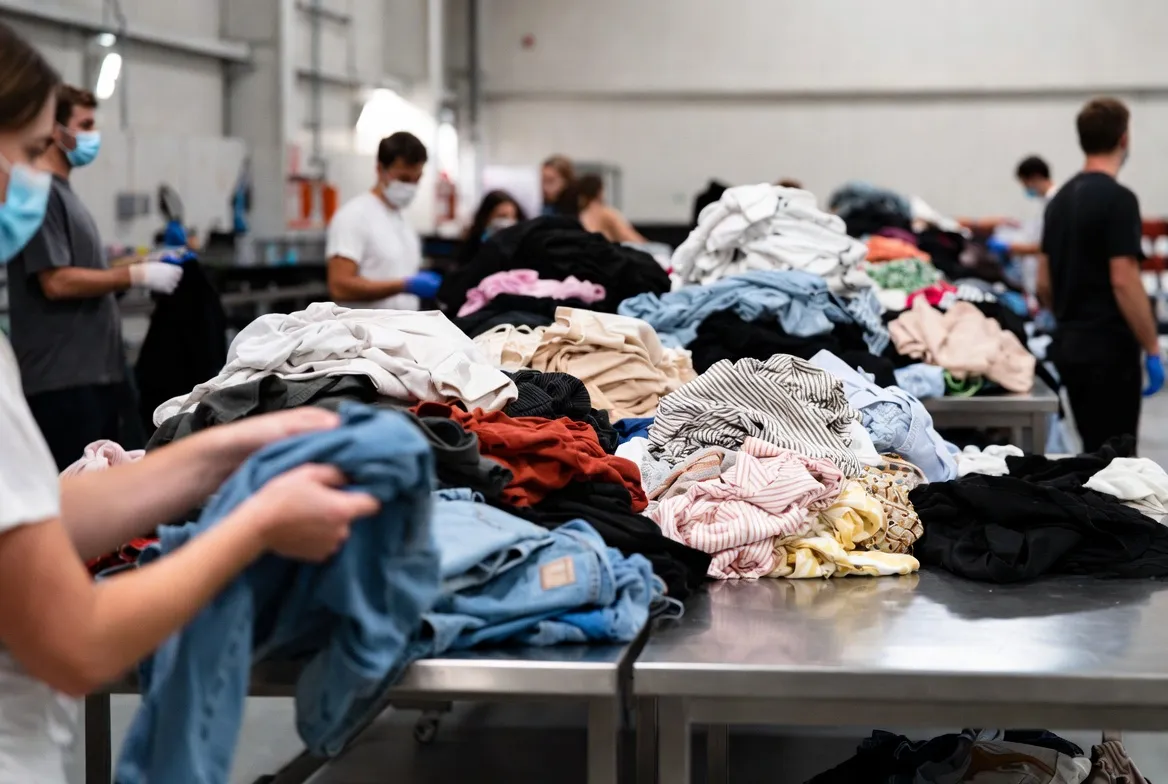
Every garment we process is given a second life. At Umba Textiles, sustainability is not a marketing initiative — it is the foundation of our entire business model. By collecting, sorting, and redistributing used textiles at scale, we divert thousands of tons of clothing from landfills every year and channel them into productive use.
Our operations achieve a landfill diversion rate exceeding 95% — meaning virtually nothing that enters our facilities goes to waste.
The Lifecycle Approach
Our sustainability impact operates across three distinct value streams, ensuring that every textile we handle finds an appropriate second use:
Resale-grade garments. The majority of our sorted output — quality used clothing graded for direct resale in markets worldwide. These garments serve consumers who need affordable, quality clothing while extending the useful life of textiles by years. Every garment resold is a garment that did not need to be manufactured from scratch.
Industrial applications. Textiles that are no longer suitable for wear but remain structurally sound are channeled into industrial wiping cloths, cleaning rags, and other commercial applications. This second-tier recovery captures value from garments that would otherwise be discarded and serves a robust industrial demand for textile-based cleaning products.
Fiber reclamation. Materials at the end of their wearable and functional life are processed for fiber recovery — shredded and reconstituted into insulation, stuffing, nonwoven fabrics, and other recycled fiber products. This final recovery stage ensures that even the lowest-grade textiles contribute to the circular economy rather than occupying landfill space.
Environmental Impact
The textile industry is one of the world’s most resource-intensive sectors. Manufacturing a single cotton t-shirt requires approximately 2,700 liters of water and generates significant carbon emissions. Every ton of used clothing we process and redistribute represents a substantial saving in water, energy, and raw materials compared to new production.
Across our annual processing volume of over 24,000 tons, the cumulative environmental benefit is significant — millions of liters of water conserved, thousands of tons of CO₂ emissions avoided, and a measurable reduction in textile waste reaching landfills.
Our Commitment
Sustainability at Umba Textiles is not a department or a program — it is embedded in how we operate. Our facilities are continuously optimized for energy efficiency and waste minimization. Our sorting processes are designed to maximize the proportion of material channeled into the highest-value recovery stream available.
We are committed to operating as a responsible participant in the global textile ecosystem — connecting the supply of used textiles with the demand for affordable clothing, industrial materials, and recycled fibers. The result is a business model where commercial success and environmental responsibility are not in tension — they are the same thing.